Communication models in IOT

IoT devices are found everywhere and will enable circulatory intelligence in the future. For operational perception, it is important and useful to understand how various IoT devices communicate with each other. Communication models used in IoT have great value. The IoTs allow people and things to be connected any time, any space, with anything and anyone, using any network and any service.

Types of Communication Model :

1. Request & Response Model – 
This model follows a client-server architecture.

  • The client, when required, requests the information from the server. This request is usually in the encoded format.
  • This model is stateless since the data between the requests is not retained and each request is independently handled.
  • The server Categories the request, and fetches the data from the database and its resource representation. This data is converted to response and is transferred in an encoded format to the client. The client, in turn, receives the response.
  • On the other hand — In Request-Response communication model client sends a request to the server and the server responds to the request. When the server receives the request it decides how to respond, fetches the data retrieves resources, and prepares the response, and sends it to the client.

2. Publisher-Subscriber Model –
This model comprises three entities: Publishers, Brokers, and Consumers. 
null

  • Publishers are the source of data. It sends the data to the topic which are managed by the broker. They are not aware of consumers.
  • Consumers subscribe to the topics which are managed by the broker.
  • Hence, Brokers responsibility is to accept data from publishers and send it to the appropriate consumers. The broker only has the information regarding the consumer to which a particular topic belongs to which the publisher is unaware of.

3. Push-Pull Model – 
The push-pull model constitutes data publishers, data consumers, and data queues.

  • Publishers and Consumers are not aware of each other.
  • Publishers publish the message/data and push it into the queue. The consumers, present on the other side, pull the data out of the queue. Thus, the queue acts as the buffer for the message when the difference occurs in the rate of push or pull of data on the side of a publisher and consumer.
  • Queues help in decoupling the messaging between the producer and consumer. Queues also act as a buffer which helps in situations where there is a mismatch between the rate at which the producers push the data and consumers pull the data.

4. Exclusive Pair –

  • Exclusive Pair is the bi-directional model, including full-duplex communication among client and server. The connection is constant and remains open till the client sends a request to close the connection.
  • The Server has the record of all the connections which has been opened.
  • This is a state-full connection model and the server is aware of all open connections.
  • WebSocket based communication API is fully based on this model.

Communication Models in IoT (Internet of Things )IoT devices are found everywhere and will enable circulatory intelligence in the future. For operational perception, it is important and useful to understand how various IoT devices communicate with each other. Communication models used in IoT have great value. The IoTs allow people and things to be connected any time, any space, with anything and anyone, using any network and any service.Types of Communication Model :1. Request & Response Model – This model follows a client-server architecture.The client, when required, requests the information from the server. This request is usually in the encoded format.This model is stateless since the data between the requests is not retained and each request is independently handled.The server Categories the request, and fetches the data from the database and its resource representation. This data is converted to response and is transferred in an encoded format to the client. The client, in turn, receives the response.On the other hand — In Request-Response communication model client sends a request to the server and the server responds to the request. When the server receives the request it decides how to respond, fetches the data retrieves resources, and prepares the response, and sends it to the client.2. Publisher-Subscriber Model –This model comprises three entities: Publishers, Brokers, and Consumers. Publishers are the source of data. It sends the data to the topic which are managed by the broker. They are not aware of consumers.Consumers subscribe to the topics which are managed by the broker.Hence, Brokers responsibility is to accept data from publishers and send it to the appropriate consumers. The broker only has the information regarding the consumer to which a particular topic belongs to which the publisher is unaware of.3. Push-Pull Model – The push-pull model constitutes data publishers, data consumers, and data queues.Publishers and Consumers are not aware of each other.Publishers publish the message/data and push it into the queue. The consumers, present on the other side, pull the data out of the queue. Thus, the queue acts as the buffer for the message when the difference occurs in the rate of push or pull of data on the side of a publisher and consumer.Queues help in decoupling the messaging between the producer and consumer. Queues also act as a buffer which helps in situations where there is a mismatch between the rate at which the producers push the data and consumers pull the data.4. Exclusive Pair –Exclusive Pair is the bi-directional model, including full-duplex communication among client and server. The connection is constant and remains open till the client sends a request to close the connection.The Server has the record of all the connections which has been opened.This is a state-full connection model and the server is aware of all open connections.WebSocket based communication API is fully based on this model.IoT devices are found everywhere and will enable circulatory intelligence in the future. For operational perception, it is important and useful to understand how various IoT devices communicate with each other. Communication models used in IoT have great value. The IoTs allow people and things to be connected any time, any space, with anything and anyone, using any network and any service.Types of Communication Model :Request & Response Model –This model follows a client-server architecture.The client, when required, requests the information from the server. This request is usually in the encoded format.This model is stateless since the data between the requests is not retained and each request is independently handled.The server Categories the request, and fetches the data from the database and its resource representation. This data is converted to response and is transferred in an encoded format to the client. The client, in turn, receives the response.On the other hand — In Request-Response communication model client sends a request to the server and the server responds to the request. When the server receives the request it decides how to respond, fetches the data retrieves resources, and prepares the response, and sends it to the client.Publisher-Subscriber Model –This model comprises three entities: Publishers, Brokers, and Consumers.Publishers are the source of data. It sends the data to the topic which are managed by the broker. They are not aware of consumers.Consumers subscribe to the topics which are managed by the broker.Hence, Brokers responsibility is to accept data from publishers and send it to the appropriate consumers. The broker only has the information regarding the consumer to which a particular topic belongs to which the publisher is unaware of.Push-Pull Model –The push-pull model constitutes data publishers, data consumers, and data queues.Publishers and Consumers are not aware of each other.Publishers publish the message/data and push it into the queue. The consumers, present on the other side, pull the data out of the queue. Thus, the queue acts as the buffer for the message when the difference occurs in the rate of push or pull of data on the side of a publisher and consumer.Queues help in decoupling the messaging between the producer and consumer. Queues also act as a buffer which helps in situations where there is a mismatch between the rate at which the producers push the data and consumers pull the data.Exclusive Pair –Exclusive Pair is the bi-directional model, including full-duplex communication among client and server. The connection is constant and remains open till the client sends a request to close the connection.The Server has the record of all the connections which has been opened.This is a state-full connection model and the server is aware of all open connections.WebSocket based communication API is fully based on this model.

IOT business opportunities

Internet of Things Business Opportunities is in a wide number of industries. Here, we will look after all of them in detail:

Medical & Fitness

Fitness wearables are connected to the Internet so that they can interact with our smartphones. A fitness ring connected to an IoT system and syncing could provide a lot of details.

One of the vital things of these devices is to transfer data from your heartbeat to a medical institution or a doctor in an emergency.

Likewise, when various smart sensors are connected to the Internet, they are useful to send information to doctors, and hence doctors can remotely look after their patients.

The medical sector is extensive. Here, a lot of things in a hospital can be improved with the use of IoT. For example, IoT can help a patient to fix an appointment with a doctor instantly.

This will ultimately reduce the average time that the user spends in making the appointment.

IIoT

Industrial IoT’s primary purpose is to utilize sensors and automation to make their business operations highly effective. It is merely useful in rapid and better decision making.

By gathering detailed data in real-time, the IIoT allows companies to know their business processes well, and by analyzing data obtained from sensors, they can transform their operations and come up with new revenue streams.

As of now, IIoT is highly adopted in industries like retail, manufacturing, utilities, and transport. So, these are some Internet of Things Business Opportunities.

Smart Cities

IoT Smart City

Even though various cities around the world have started adopting the latest technologies to make it smart, there is still room for improvement.

By entering into this business, there is a strong possibility for you to become a leader. Here are some things you can consider:

Smart Parking

Using the GPS data from smartphones or sensors integrated on the ground of the parking spaces, smart parking solutions provide details about all the nearby parking spots and also form a real-time parking map.

As soon as the nearest parking spot is available, users get notified along with directions; hence, they can park their car efficiently.

Street Lighting

Handling and maintenance of street lamps can be simplified and affordable via IoT. Embedding street lights with sensors and linking them with a cloud management system allows creating a lighting schedule for the lighting zone.

There were just two examples of how a city can be transformed into a smart city. Apart from the above, there are a lot of other ways IoT is useful for smart city adoption such as waste management, solar panels, etc.

IoT Toys

IoT_toys

Toys are one of the most essential things for kids and hence there is an excellent opportunity to help kids grow using IoT Toys. This is one of the classic IoT Business Opportunities.

For instance, toy robots such as Dash enable kids to program how the robot moves, and Harry Potter Kano Coding Kit teaches coding skills to the kids.

Another important issue that most parents face is measuring the temperature of the kids. Using a responsive toy like Teddy the guardian, you can instantly know the kid’s temperature via its sensors.

Cars

With each passing year, cars are transforming to new heights and in the future, we might be able to see autonomous cars. So, you can also integrate some new things in this wonderful sector.

But, currently, the major issue faced by a lot of drivers is the security of their cars. To resolve this, you can introduce various sensors into the car that recognize the driver based on their weight, height, and face.

If all the elements don’t match with the data, then the IoT car gets locked instantly. So, these are one of the Internet of Things Business Opportunities.

Moreover, sensors can be beneficial to enhance security on the road when someone is driving the car. Such as quick measurements between cars can save numerous lives.

Territory IoT Monitoring

IoT can be highly useful in the farming sector. IoT devices can help to track the soil humidity and also manage the water supply.

These devices also enable to manage the health of fruits and vegetables and notify farmers when to do the harvesting.

Devices such as infrared cameras and air filters are useful to save forests from the fire. These devices can be highly beneficial in nations with issues in different weathers.

Customer Appliances

In customer appliances, you can consider a vast number of things to improve the life of the customers.

This can be anything such as a smart washing machine that is operated using a smartphone, smart doorbell or security, smart fridge that suggests shopping lists as per available products, etc.

Manufacture of sulphur

Production of Sulphur carried out in three basic ways:

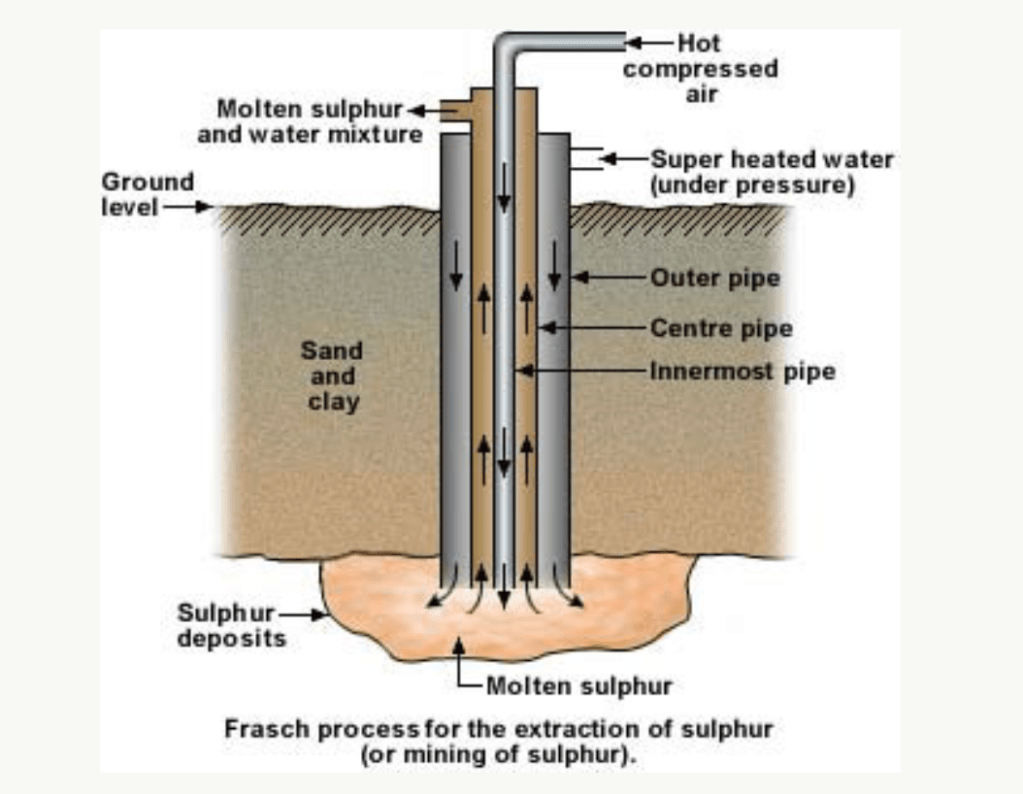
  • Mined through the use of wells drilled to sulphur deposits and worked with the “Frasch” method;
  • Extracted from the oil or gas stream at a processing plant;
  • Scraped from the surface of the earth or dug out of open pits.

“Crude” sulfur is produced from the Frasch process or recovered from “sour” natural gas or petroleum. Although termed “crude”, this sulfur possesses a minimum purity of 99.5 percent and is suitable for a majority of uses. The impurities consist primarily of trapped organic matter.

In some regions of the world the sulfur occurs at depths of 500 to 3,000 feet in domes subterraneously up-thrust by columns of salt. This native sulfur associated with the caprock of salt domes and in sedimentary deposits was mined by the Frasch hot-water method, in which the native sulfur was melted underground and brought to the surface by compressed air. The Frasch process utilizes a steel tube made up of three concentric pipes that are driven underground to reach the sulfur deposit. Superheated water is then pumped down under great pressure in the outermost pipe to melt the sulfur. Air pressure from the innermost pipe forces the sulfur up the third pipe to the surface where it cools and solidifies.

In 1900, Herman Frasch was trying to perfect his hot water melting process for producing sulfur. Domestic production was about 3,200 metric tons of sulfur valued at $88,100. Native sulfur deposits in Louisiana, Nevada, Texas, and Utah were mined with conventional mining methods. Domestic sulfur production, including mined elemental sulfur and pyrites, supplied about one-quarter of the U.S. sulfur demand of about 415,000 tons. Most sulfur and pyrites, domestic and imported, were used to produce sulfuric acid that was consumed in many different industries. Virtually all elemental sulfur imports came from the Italian island of Sicily, and pyrite imports were from unspecified locations. Pyrites remained a significant raw material for sulfuric acid until 1982. When the Frasch process was successfully commercialized in 1903, the U.S. sulfur industry took a turn for the better. By about 1915, the United States surpassed Italy as the world’s leading producer of sulfur, a situation that continued throughout the century, during which eight companies produced nearly 340 million tons of sulfur from 36 mines in Louisiana and Texas. Frasch sulfur production hit its peak in 1974 when 12 mines produced 8 million tons.

Recovered Sulphur from oil or gas
Recovered elemental sulfur, a nondiscretionary byproduct from petroleum refining, natural gas processing, and coking plants, was produced primarily to comply with environmental regulations that were applicable directly to emissions from the processing facility or indirectly by restricting the sulfur content of the fuels sold or used by the facility.

Recovered sulfur tonnages are expected to increase as the demand for clean-emission fuel continues.

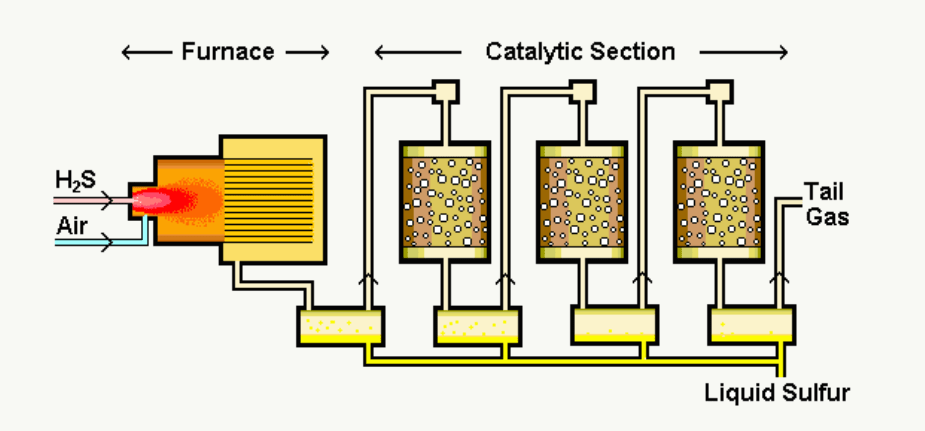
Sulfur recovery refers to the conversion of hydrogen sulfide (H2S) to elemental sulfur. Hydrogen sulfide is a byproduct of processing natural gas and refining high-sulfur crude oils. The most common conversion method used is the Claus process. Approximately 90 to 95 percent of recovered sulfur is produced by the Claus process. The Claus process typically recovers 95 to 97 percent of the hydrogen sulfide feedstream.

Sulfur removal facilities are located at the majority of oil and gas processing facilities throughout the world. The sulfur recovery unit does not make a profit for the operator but it is an essential processing step to allow the overall facility to operate as the discharge of sulfur compounds to the atmosphere is severely restricted by environmental regulations. Oil and gas producers are attempting to maximise production at minimum cost. This often means debottlenecking existing upstream facilities and may result in extra sulfur recovery capacity being required. Oil refiners are also increasingly being forced to comply with legislation reducing the levels of sulfur in products. Combine this with the ability or need to process sourer crude oils and many refiners find that their existing sulfur recovery units do not have sufficient capacity. Furthermore, in many countries environmental legislation is demanding higher recoveries from sulfur recovery units.

Crude natural gas recovered from wells contains fairly high concentrations of H2S and SO2 gases that are separated and converted to elemental sulfur in gas processing companies via different processes (usually Claus process). This process is called gas sweetening process. Condensations or petroleum cuts also could contain sulfur compounds (e.g. mercaptans) that are separated via various processes and are converted to elemental sulfur. According to the industrial reports, more than 45% and 48% of global sulfur is produced in petroleum and gas industries, respectively.

Manufacture of bleaching powder

Bleaching Powder chemical composition: Ca(ClO)2CaCl2Ca(OH)2.2H2O


Calcium hypochlorite – Ca(OCl)2
Ca(OCl)2 is a white, corrosive solid that comes either in tablet form or as a granular powder in the market. It easily emits chlorine gas easily when it contacts with water or moisture.

Raw Materials of bleaching powder manufacturing process

  • Limestone (CaCO3) – to obtain calcium oxide
  • Chlorine gas (Cl2)
  • Bleaching powder manufacturing process
  • Steps, reactions, materials of bleaching powder and physical conditionsin manufacturing process is explained below.


    Heating limestone
    First, slaked lime (CaO) is produced by heating limestine. As a by product carbon dioxide is given.

    calcium-carbonate-decomposition

    Calcium oxide and water reaction
  • Calcium oxide is mixed with water to take calcium hydroxide ( Ca(OH)2 ). Ca(OH)2 is precipitated in concentrated solutions.
  • CaO + H2O slaked lime
    Calcium hydroxide and chlorine gas rection
    Finally, Calcium hydroxide ( Ca(OH)(s) ) is reacted with chlorine ( Cl2 ) gas. This reaction gives the bleaching powder.
  • slaked lime and chlorine gas reaction

Introduction to fertilizer

1.1 Introduction
A fertilizer is a material that furnishes one or more of the chemical elements necessary for
the proper development and growth of plants. The most important fertilizers are fertilizer
products (also called chemical or mineral fertilizers), manures, and plant residues. A
fertilizer product is a material produced by industrial processes with the specific purpose of
being used as a fertilizer. Fertilizers are essential in today’s agricultural system to replace
the elements extracted from the soil in the form of food and other agricultural products.
1.2 Plant Nutrients
Chemical elements that are essential for the proper development and growth of plants are
typically referred to as plant nutrients. The list of plant nutrients recognized as being
necessary for plant growth has increased over the years and now totals sixteen,
1.2.1 Expression
Many countries express quantities or percentages of the primary nutrients in terms of
elemental nitrogen (N), phosphorus pen oxide (P2O5), and potassium oxide (K2O2).
Secondary nutrients and micronutrients usually are expressed on an elemental basis
although calcium and magnesium sometimes are expressed in the oxide form. However,
several countries express all plant nutrients on an elemental basis.

Classification of Elements Essential for Plant Growth
Major elements (Available from air or water) Carbon
(Macronutrients)
Hydrogen
Oxygen
Primary nutrients Nitrogen
Phosphorus
Potassium
Secondary nutrients Calcium
Magnesium
Sulfur

Minor elements Boron
(Micronutrients) Chlorine
Copper
Iron
Manganese
Molybdenum
Zinc
1.2.2 Fertilizer Grade
All fertilizer labels have three bold numbers. The first number is the amount of nitrogen (N),
the second number is the amount of phosphate (P2O5) and the third number is the amount
of potash (K2O). These three numbers represent the primary nutrients (nitrogen(N) –
phosphorus(P) – potassium(K)).
This label, known as the fertilizer grade, is a national standard. A bag of 10-10-10 fertilizer
contains 10 percent nitrogen, 10 percent phosphate and 10 percent potash.

Fertilizer grades are made by mixing two or more nutrient sources together to form a blend
that is why they are called “mixed fertilizers.” Blends contain particles of more than one
color. Manufacturers produce different grades for the many types of plants.
You can also get fertilizers that contain only one of each of the primary nutrients. Nitrogen
sources include ammonium nitrate (33.5-0-0), urea nitrogen (46-0-0), sodium nitrate (16-0-
0) and liquid nitrogen (30-0-0). Phosphorus is provided as 0-46-0 and potash as 0-0-60 or
0-0-50.
1.2.3 Fertilizer Specifications
Specifications are the requirements with which a fertilizer should conform, as
agreed upon between buyer and seller. Fertilizer specifications meet differing requirements
depending on the use or intent of the specification information.
Specifications are normally used in the contract between the buyer and seller of a
fertilizer to ensure agreement on product characteristics or more often to define the product
in sufficient detail to effect the satisfaction of both buyer and seller.
1.3 Terminology and Definitions
The below specified definitions are those given by International Association for
Standardization (ISO) and Association of American Plant Food Control Officials
(AAPFCO)
Fertilizer Material- A fertilizer that meets any of the following conditions (AAPFCO):
1. Contains important quantities of no more than one of the primary plant nutrients
(nitrogen, phosphorus, or potassium).
2. Has 85% or more of its plant nutrient content present in the form of a single
chemical compound.

Is derived from a plant or animal residue or by product or natural material deposit
which has been processed in such a way that its content of plant nutrients has not
been materially changed except by purification and concentration.
Fertilizer- In the simplest terminology, a material, the main function of which is to provide
plant nutrients.
Soil Conditioner – Material added to soils, the main function of which is to improve their
physical and/ or chemical properties and/ or their biological activity.
Liming Material – An inorganic soil conditioner containing one or both of the elements
calcium and magnesium, generally in the form of an oxide, hydroxide, or carbonate,
principally intended to maintain or raise the pH of soil.
Straight Fertilizer: A qualification generally given to a nitrogenous, phosphatic, or
potassic fertilizer having a declarable content of only one of the primary plant nutrients, i.e.
nitrogen, phosphorus, or potassium.
Compound Fertilizer: A fertilizer that has a declarable content of at least two of the plant
nutrients nitrogen, phosphorus and potassium, obtained chemically or by blending or both.
Granular Fertilizer:– Solid material that is formed into particles of a predetermined mean
size.
Coated Fertilizer – Granular fertilizer that is covered with a thin of a different material in
order to improve the behavior and/ or modify the characteristics of the fertilizer.
Other related terms are:
Coated Slow-Release Fertilizer (AAPFCO)- A product containing sources of water-
soluble nutrients, release of which in the soil is controlled by a coating applied to the
fertilizer.Polymer-Coated Fertilizer (AAPFCO)-A coated slow-release fertilizer consisting of
fertilizer particles coated with a polymer (plastic) resin. It is a source of slowly available
plant nutrients.
Controlled-Release Fertilizers- Fertilizers in which one or more of the nutrients have
limited solubility in the soil solution, so that they become available to thea growing plant
over a controlled period.
Nitrogen Stabilizer (AAPFCO) – A substance added to a fertilizer to extend the time that
the nitrogen component of the fertilizer remains in the soil in the ammonia cal form.
Liquid Fertilizer – A term used for fertilizers in suspension or solution and for liquefied
ammonia (ISO).
Solution Fertilizers (ISO) – Liquid fertilizer free of solid particles.
Suspension Fertilizer (ISO) – A two-phase fertilizer in which solid particles are
maintained in suspension in the aqueous phase.
Suspension Fertilizer (AAPFCO) – A fluid containing dissolved and UN dissolved plant
nutrients. The suspension of the undissolved plant nutrients may be inherent with the
materials or produced with the aid of a suspending agent of nonfertilizer properties.
Mechanical agitation may be necessary in some cases to facilitate uniform suspension of
undissolved plant nutrients.
Suspension Fertilizer – A liquid (fluid) fertilizer containing solids held in suspension, for
example, by the addition of a small amount of clay. The solids may be water-soluble in a
saturated solution, or they may be insoluble, or both.
Slurry Fertilizer (AAPFCO)–A fluid mixture that contains dissolved and undissolved
plant nutrient materials and requires continuous mechanical agitation to assure
homogeneity.

Powder – A solid substance in the form of very fine particles. Powder is also referred to as
“no granular fertilizer” and is sometimes defined as a fertilizer containing fine particles,
usually with some upper limit such as 3 mm nut no lower limit.
Formula – A term used in some countries to express, by numbers, in the order N-P-K
(nitrogen- phosphorus- potassium), the respective content of these nutrients in a compound
fertilizer.
Bulk – Qualification given to a fertilizer or soil conditioner not packed in a container
(ISO).
Guarantee (of Composition) – Quantitative and/ or qualitative characteristic with which
a market product must comply for contractual or legal requirements.
Declarable – Content – That content of an element (or an oxide) which, according to
national legislation, may be given on a label or document associated with a fertilizer or soil
conditioner.
Fertilizer unit – The unit mass of a fertilizer nutrient (in the form of the element or an
oxide) generally I kg.
Plant Food Ratio – The ratio of the numbers of fertilizer units in a given mass of fertilizer
expressed in the order N – P – K.

Manufacture of urea

THE UREA MANUFACTURING PROCESS
Urea is produced from ammonia and carbon dioxide in two equilibrium reactions:
2NH3 + CO2 ! NH2COONH4
ammonium carbamate
NH2COONH4 ! NH2CONH2 + H2O
urea
The urea manufacturing process, shown schematically in Figure 2, is designed to maximise
these reactions while inhibiting biuret formation:
2NH2CONH2 ! NH2CONHCONH2 + NH3
biuret
This reaction is undesirable, not only because it lowers the yield of urea, but because biuret
burns the leaves of plants. This means that urea which contains high levels of biuret is
unsuitable for use as a fertiliser. The structure of these compounds is shown in Figure 3.
Step 1 – Synthesis
A mixture of compressed CO2 and ammonia at 240 barg is reacted to form ammonium
carbamate. This is an exothermic reaction, and heat is recovered by a boiler which produces
steam. The first reactor acheives 78% conversion of the carbon dioxide to urea and the liquid
is then purified. The second reactor recieves the gas from the first reactor and recycle
solution.

from the decomposition and concentration sections. Conversion of carbon dioxide to urea is
approximately 60% at a pressure of 50 barg. The solution is then purified in the same
process as was used for the liquid from the first reactor.

Step 2 – Purification
The major impurities in the mixture at this stage are water from the urea production reaction
and unconsumed reactants (ammonia, carbon dioxide and ammonium carbamate). The
unconsumed reactants are removed in three stages3
. Firstly, the pressure is reduced from 240
to 17 barg and the solution is heated, which causes the ammonium carbamate to decompose
to ammonia and carbon dioxide:
NH2COONH4 ! 2NH3 + CO2
At the same time, some of the ammonia and carbon dioxide flash off. The pressure is then
reduced to 2.0 barg and finally to -0.35 barg, with more ammonia and carbon dioxide being
lost at each stage. By the time the mixture is at -0.35 barg a solution of urea dissolved in
water and free of other impurities remains.
At each stage the unconsumed reactants are absorbed into a water solution which is recycled
to the secondary reactor. The excess ammonia is purified and used as feedstock to the
primary reactor.
Step 3 – Concentration
75% of the urea solution is heated under vacuum, which evaporates off some of the water,
increasing the urea concentration from 68% w/w to 80% w/w. At this stage some urea
crystals also form. The solution is then heated from 80 to 110o
C to redissolve these crystals
prior to evaporation. In the evaporation stage molten urea (99% w/w) is produced at 140o
C.
The remaining 25% of the 68% w/w urea solution is processed under vacuum at 135o
C in a
two series evaporator-separator arrangement.
Step 4 – Granulation
Urea is sold for fertiliser as 2 – 4 mm diameter granules. These granules are formed by
spraying molten urea onto seed granules which are supported on a bed of air. This occurs in
a granulator which receives the seed gransules at one end and discharges enlarged granules at
the other as molten urea is sprayed through nozzles. Dry, cool granules are classified using
screens. Oversized granules are crushed and combined with undersized ones for use as seed.
All dust and air from the granulator is removed by a fan into a dust scrubber, which removes
the urea with a water solution then discharges the air to the atmosphere. The final product is
cooled in air, weighed and conveyed to bulk storage ready for sale.om the decomposition and concentration sections. Conversion of carbon dioxide to urea is
approximately 60% at a pressure of 50 barg. The solution is then purified in the same
process as was used for the liquid from the first reactor.

Manufacture of sodium carbonate

There are two main sources of sodium carbonate:
a) from salt and calcium carbonate (via the ammonia soda (Solvay) process)
b) from sodium carbonate and hydrogencarbonate ores (trona and nahcolite)

(a) From sodium chloride and calcium carbonate

The overall reaction can be regarded as between calcium carbonate and sodium chloride:

However, calcium carbonate is too insoluble to react with a solution of salt.  Instead the product is obtained by a series of seven stages.

The process is known as the ammonia-soda process or the Solvay process, named after the Belgian industrial chemist who patented it in 186I.

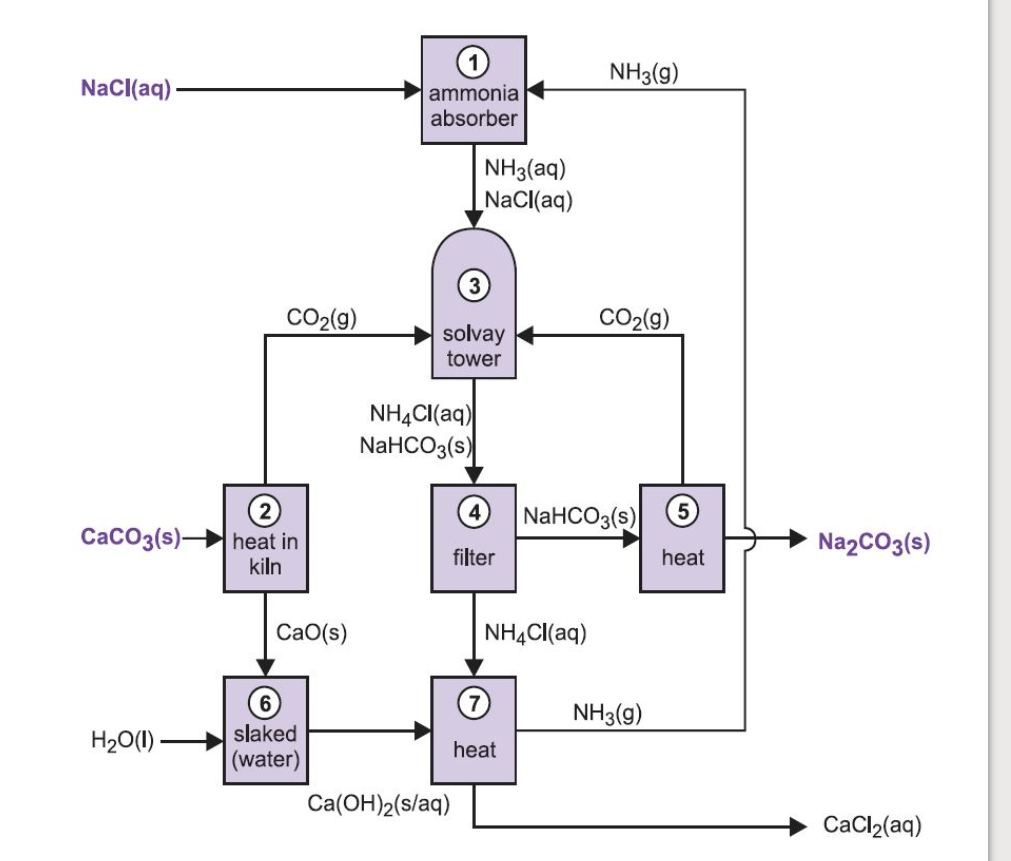
The various stages of the Solvay process are interlinked as can be seen from the diagram and description below.

(1) Ammoniation of brine

Ammonia gas is absorbed in concentrated brine to give a solution containing both sodium chloride and ammonia. Na+(aq), Cl(aq), NH4+(aq), OH(aq) ions and NH3(aq) are present.

(2) Formation of calcium oxide and carbon dioxide

Kilns are fed with a limestone/coke mixture (13:1 by mass).  The coke burns in a counter-current of pre-heated air:

The heat of combustion raises the temperature of the kiln and the limestone decomposes:

The gas, containing approximately 40% carbon dioxide, is freed of lime dust and sent to the carbonating (Solvay) towers.  The residue, calcium oxide, is used in ammonia recovery (see step 7 below).

(3) The Solvay Tower

This is the key stage in the process. The ammoniated brine from step (1) is passed down through the Solvay Tower while carbon dioxide from steps (2) and (5) is passed up it.  The Solvay Tower is tall and contains a set of mushroom-shaped baffles to slow down and break up the liquid flow so that the carbon dioxide can be efficiently absorbed by the solution.  Carbon dioxide, on dissolving, reacts with the dissolved ammonia to form ammonium hydrogencarbonate:

The solution now contains ions Na+(aq), Cl(aq), NH4+(aq) and HCO3(aq).  Of the four substances which could be formed by different combinations of these ions, sodium hydrogencarbonate (NaHCO3) is the least soluble. It precipitates as a solid in the lower part of the tower, which is cooled.  The net process is:

A suspension of solid sodium hydrogencarbonate in a solution of ammonium chloride is run out of the base of the tower.

(4) Separation of solid sodium hydrocarbonate

The suspension is filtered to separate the solid sodium hydrogencarbonate from the ammonium chloride solution, which is then used in stage (7).

(5) Formation of sodium carbonate

The sodium hydrogencarbonate is heated in rotating ovens at 450 K so that it decomposes to sodium carbonate, water and carbon dioxide:

The carbon dioxide is sent back to the Solvay Tower for use in step (3).  The product of the process, anhydrous sodium carbonate, is obtained as a fine white powder known as light sodium carbonate.

(6) Formation of calcium hydroxide

The last two stages, (6) and (7), are concerned with the regeneration of ammonia from ammonium chloride (made in step 3).  The quicklime from step (2) is slaked with excess water giving milk of lime:

(7) Regeneration of ammonia

This calcium hydroxide suspension is mixed with the ammonium chloride solution left from step (4) and heated:

The ammonia is thus recovered, and sent back to step (1).  Calcium chloride is the only by-product of the whole process.

The overall process is an elegant one. In theory, the only raw materials are limestone and brine.  Inevitably, there are losses of ammonia, and these are made up for by addition of extra supplies, as required in step (1).

Manufacture of sodium chloride

Sodium Chloride, with the molecular formula NaCl, is an ionic compound. Sodium Chloride is known as salt as well. It occurs in coastal waters and oceans. It is also present in the form of rock salt. NaCl is consist of approximately 1 per cent to 5 per cent seawater. It is a white crystalline solid. The Sodium Chloride molecular weight is 58.44g/mol.

This compound consists of sodium cation and chloride anion and is water-soluble. The ratio of sodium and chloride ions is 1:1. It is commonly recognized as table salt and is mainly useful for preservation and flavouring in the food industry. Sodium chloride has a pH of 7. It occurs as colourless cubic crystals. In the sea and coastal waters, sodium chloride is present, making them saltiness. About 1-5 per cent of sodium chloride is made from seawater. It is also found as the halite mineral.

Production of Sodium Chloride


Sodium Chloride is currently mass-produced from brine wells and salt lakes by evaporation of seawater or brine. A big cause is the extraction of rock salt as well. The sequence of deposition for seawater and certain brines is calcium carbonate, calcium sulphate, sodium chloride, magnesium sulphate, magnesium potassium chloride, and magnesium chloride.

In a combustive reaction that releases about 411 kilojoules of energy per mole of the compound, because of the violence of such a reaction. Sodium chloride solutions are often formed by the neutralization of the strong base sodium hydroxide and the strong acid hydrochloric acid, reversing the energy-absorbing electrolysis mechanism that allows both sodium hydroxide and hydrochloric acid more expensive than sodium chloride and allows water to evaporate from the solution, which is not feasible.

Similarly, after a reaction between a metallic chloride (most are soluble) and such a salt as sodium carbonate (one of the few water-soluble carbonates) as an insoluble carbonate, it is formed from several reactions involving solutes that make sodium chloride as the remaining solution.

Consequently, the addition of ferrous chloride to calcium carbonate or sodium carbonate solution results in the precipitation of ferrous carbonate from the remaining sodium chloride in the solution. Sodium chloride is so affordable that it never has to synthesize. By pouring water into underground salt fields, most of the artificial brines are collected. In industrial countries, a large volume of brine itself is directly in use.

Uses of Sodium Chloride

  1. Soda-ash industry: In the Solvay process, sodium chloride is useful to produce sodium carbonate and calcium chloride. In turn, sodium carbonate, as well as a vast number of other chemicals, is in use to make glass, sodium bicarbonate. Sodium chloride is useful for the production of sodium sulphate and hydrochloric acid in the Mannheim process and the Hargreaves process.
  2. Chlor-alkali industry: It is the starting point for the process of Chlor-alkali, the synthetic chlorine and sodium hydroxide manufacturing process in either a mercury cell, a diaphragm cell, or a membrane cell. To isolate the chlorine from the sodium hydroxide, each of these requires a different form. To isolate the chlorine from the sodium hydroxide, each of these requires a different form. PVC, disinfectants, and solvents include some applications of chlorine. Sodium hydroxide requires paper, soap, and aluminium to be produced by factories.
  3. Water softening: Hard water contains calcium and magnesium ions that interact with the activity of soap and contribute to the deposition in household and industrial machinery and pipes of alkaline mineral deposits on a scale or film. To extract the offending ions that cause the hardness, commercial and residential water-softening units to use ion-exchange resins. The use of sodium chloride to produce and regenerate these resins.
  4. Road Salt: The second main use of salt is for the de-icing and anti-icing of highways, both in grit bins and scattered by winter service trucks. Roads are optimally ‘anti-iced’ with brine (concentrated solution of salt in water) in preparation of snowfall, which eliminates bonding between the snow-ice and the ground surface. The intensive application of salt during snowfall obviates this practice. Mixtures of brine and salt, sometimes with additional agents including calcium chloride are useful for de-icing. The use of salt or brine below -10 ° C is inefficient.

Environmental Effects

While there are various advantages to the application of sodium chloride (i.e., driving safety), The excess of anthropogenic loading in the winter storms and reducing the financial impacts of winter storms. There are also harmful impacts on the climate. Studies have shown that around 955 in urbanized countries. The de-icing of chloride inputs into a watershed is from the road and parking lot. By modifying the soil and water quality and thereby affecting the biota and vegetation it sustains, these excessive amounts of sodium chloride in the atmosphere will cause problems on habitats.

Road salt ends up in fresh-water sources and by compromising its osmoregulation capacity, it could damage aquatic plants and animals. In any coastal coating application, the omnipresence of salt presents a challenge, as salts which is trap create great adhesion issues. Naval authorities and shipbuilders track during building the salt concentrations on surfaces.

Measured as sodium chloride, the IMO control is often useful and sets salt levels to a limit of 50 mg/m2 soluble salts. Using a Bresle test, these calculations are complete. Throughout North America and European freshwaters, salinization (increasing salinity, aka freshwater salinization syndrome) and the resulting increase in metal leaching is a continuous concern.

While evidence of ambient salt loading is observed at peak use, the sodium concentrations in the region where salt was applied were reduced greatly by spring rains and thaws. It is also important to consider how a particular soil deals with NaCl concentrations.

Manufacture of sodium bicarbonate

What is Sodium Bicarbonate

Sodium bicarbonate or sodium hydrogen carbonate is the chemical compound with the formula NaHCO3. Sodium bicarbonate is a white solid that is crystalline but often appears as a fine powder. It has a slightly salty, alkaline taste resembling that of washing soda (sodium carbonate). The natural mineral form is nahcolite. It is a component of the mineral natron and is found dissolved in many mineral springs.  Sodium bicarbonate is a salt with the composition of sodium and bicarbonate ions. Its IUPAC name is Sodium hydrogen carbonate and its other name is baking soda, bicarb or bicarbonate of soda. It has the boiling point of 851 degree Celsius and a melting point of 50 degree Celsius.

Discovery:

Sodium bicarbonate has a well-off history, stretching thousands of years ago. French chemist, Nicolas Leblanc made sodium carbonate, in 1791 which was also known as soda ash.

In the late 18th century, sodium bicarbonate was discovered as a leavening agent by bakers John Dwight and Austin Church, in New York. The first factory was established by these bakers in the US for producing baking soda out of carbon dioxide and sodium carbonate.

Currently, it is found among the list of essential medicines published by the World Health Organisation.

Production:

Solvay Process

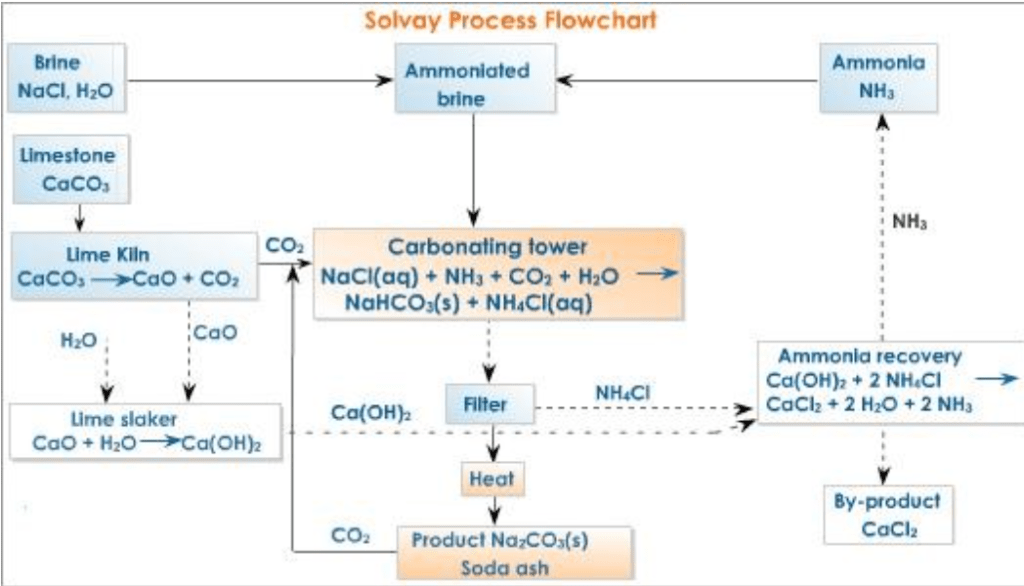
Sodium bicarbonate is mainly produced by the Solvay process. Solvay process is he reaction of sodium chloride, ammonia, and carbon dioxide in water. Calcium carbonate is used as the source of CO2 and the resultant calcium oxide is used to recover the ammonia from the ammonium chloride. The product shows a low purity (75 %). Pure product is obtained from sodium carbonate, water and carbon dioxide. Sodium bicarbonate can be prepared by carbon dioxide reacts with the sodium hydroxide aqueous solution. This reaction initially produces sodium carbonate.

Na2CO3 + CO2 + H2O → 2 NaHCO3

Then, adding carbon dioxide to this reaction produces sodium bicarbonate.

Na2CO3 + CO2 + H2O → 2 NaHCO3

Mining:

Sodium bicarbonate is naturally found in deposits of Eocene-age Green River Formation in Colorado, Piceance Basin. During high evaporation periods in the basin, sodium bicarbonate was deposited as beds. It is mined using mining techniques like bore, drum etc.

It is among the food additives encoded by European Union, identified by the initials E 500. Since it has long been known and is widely used, the salt has many related names such as baking soda, bread soda, cooking soda, and bicarbonate of soda. In colloquial usage, its name is shortened to sodium bicarb, bicarb soda, or simply bicarb.

To buy sodium bicarbonate usually there are two grades available and importers who want to buy bulk sodium bicarbonate:

Sodium bicarbonate food grade and sodium bicarbonate feed grade.

Baking soda, also known as sodium bicarbonate, is widely used in baking. This is because it has leavening properties, meaning it causes dough to rise by producing carbon dioxide. Aside from cooking, baking soda has a variety of additional household uses and health benefits. Sodium bicarbonate (baking soda, properly known as sodium hydrogen carbonate) is used in the preparation of many foods. When it decomposes, carbon dioxide is produced, and this gas produces bubbles in the food that make it “lighter” (less dense). For instance, baking soda is often used in baking cakes, in order to make them “rise” as they are cooked. As the temperature of the cake batter reaches approximately 50 °C, the baking soda decomposes and carbon dioxide is released. Baking soda is especially important in making pancakes and waffles because the high cooking temperatures (350-400°F or 175-230 °C) cause the carbon dioxide to be liberated before the dough has set. Thus, we get a light and tasty finished product. Many people who are sensitive about the presence of “chemicals” in their food are surprised to learn that this chemical and its reaction products are essential to the preparation of foods that we eat all the time.

Bicarbonate of soda is a pure leavening agent. It needs to be mixed with moisture and an acidic ingredient for the necessary chemical reaction to take place to make food rise. Because it needs an acid to create the rising quality, it is often used in recipes where there is already an acidic ingredient present, such as lemon juice, chocolate, buttermilk or honey.

When sodium bicarbonate (baking soda) is moistened and heated, it releases carbon dioxide gas. If it is moistened and heated in the presence of sufficient acid, it will release twice as much gas as if it is moistened and heated without the presence of an acid.

Slightly acidic ingredients provide the mix with some of the necessary acids for the release of carbon dioxide gas. Examples are:

Honey Molasses Ginger Cocoa Bran

For this reason, some of the mixes contain baking powder only while others contain a combination of baking powder and baking soda. If an excessive amount of baking soda is used in a cake batter without the presence of sufficient acid, the normally white cake crumb will have a yellowish-brown color and a strong undesirable smell of soda.

The gas evolves very fast at the beginning of baking when thepH level is still on the acidic side (pH of around 5 to 6). Once the soda neutralizes the acid, the dough or batter quickly becomes alkaline and the release of gas is reduced. Mixes and doughs leavened with baking soda must be handled without delay, or the release of the gas may be almost exhausted before the product reaches the oven.

The darker color of the crumb found on the bottom half of a cake or muffins is caused by the partial dehydration of the batter that is heated first during baking. In spiced honey cookies and gingerbread, baking soda is used alone to give them quick color during baking and yet keep the products soft.

In chocolate cakes, baking soda is used in conjunction with baking powder to keep the pH at a desirable level. However, it is important to know whether the cocoa powder you are using is natural or treated by the Dutch process. In the Dutch process, some of the acid in the cocoa is already neutralized, and there is less left for the release of gas in the mix. This means more baking powder and less baking soda is used.

Baking soda in a chocolate mix not only counteracts the acid content in the baked cake but also improves the grain and color of the cake. A darker and richer chocolate color is produced if the acid level is sufficient to release all the carbon dioxide gas. On the other hand, the reddish, coarse, open-grained crumb in devil’s food cake is the result of using baking soda as the principal leavening agent.

The level of baking soda depends on the nature of the product and on the other ingredients in the formula. Cookies, for example, with high levels of fat and sugar, do not require much, if any, leavening

Design a site like this with WordPress.com
Get started